Change is always happening, even when it doesn’t feel like it.
Sometimes it unfolds slowly, almost unnoticed. Other times it seems to arrive all at once, as if something has shifted overnight.
When people search for how change works, they are often noticing something subtle first — a sense that the way they experience themselves, their situation, or the world is beginning to reorganise. That noticing is not accidental. It reflects how the nervous system continuously updates its understanding of reality.
Understanding how personal change happens begins here.
How the Nervous System Maps and Filters Reality
The nervous system is always mapping and filtering reality. Every moment, it gathers sensory information, organises it, and decides what is relevant. This process happens automatically, long before conscious thought steps in.
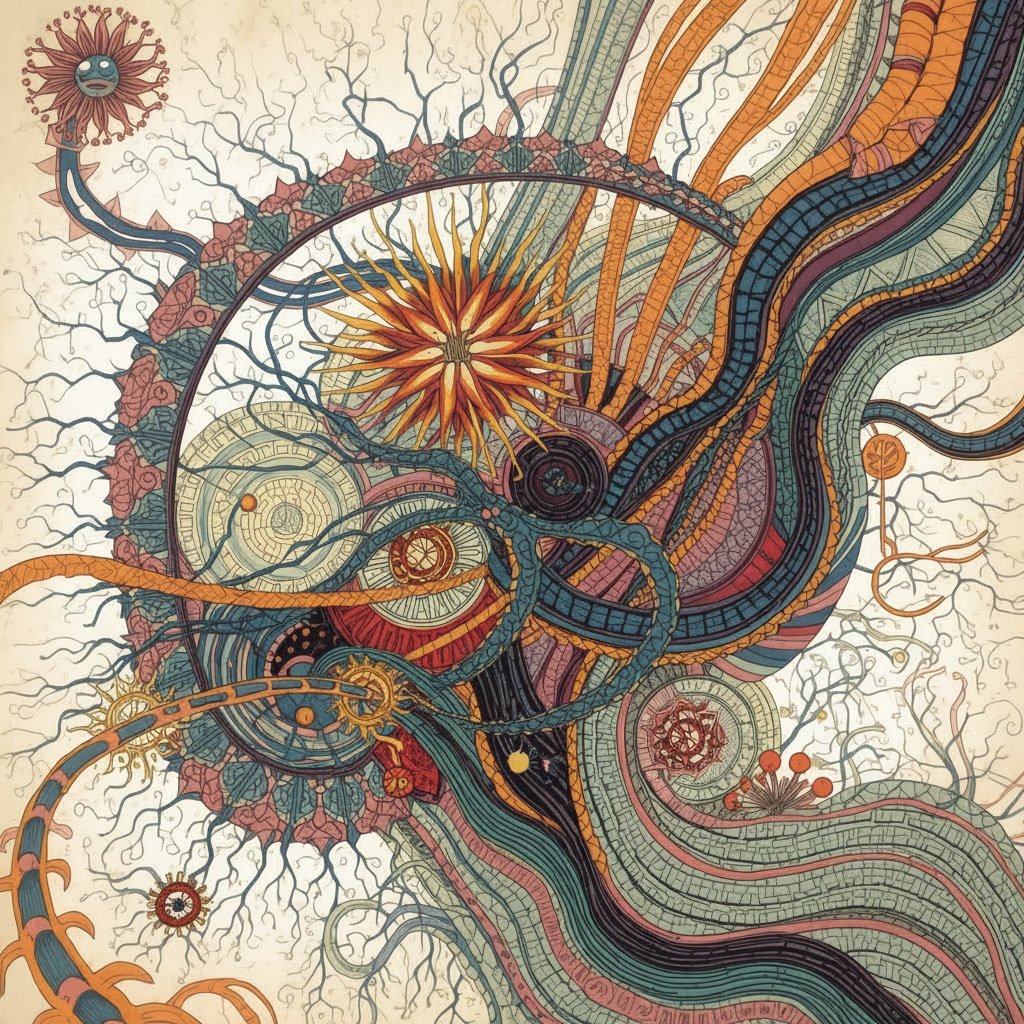
It can be helpful to think of the nervous system as a living map rather than a fixed structure. Like a map that updates as new terrain is encountered, it constantly recalibrates based on experience. Familiar patterns are reinforced. Uncertainty is approached cautiously. Experiences associated with discomfort may be filtered out altogether.
This filtering process explains why two people can experience the same situation and walk away with completely different perceptions. It is not about accuracy or error — it is about how each nervous system organises meaning.
Over time, these maps shape behaviour, identity, and expectation. Patterns repeat not because people resist change, but because the nervous system prioritises coherence.
Change and the Nervous System: Re-Organisation, Not Effort
Change is often framed as something that requires effort, discipline, or force. Yet from the perspective of the nervous system, lasting change is usually a process of re-organisation rather than exertion.
When the system updates how it understands something — a belief, a role, a relationship — behaviour tends to shift naturally. Less energy is spent trying to change, and more alignment appears on its own.
This is why change can feel easier after a certain point. The nervous system no longer has to work against its own map. Like a river gradually reshaping the landscape it flows through, new pathways form in response to updated information.
This process is often described in neuroscience as neuroplasticity, though in lived experience it simply feels like something finally makes sense.
Insight, State Change, and Why Change Can Happen Quickly
Insight plays a key role in how change happens, but insight alone is not always enough. Many people understand what they want to change and still feel stuck.
Change accelerates when insight is accompanied by a state shift.
When understanding reaches emotional and physiological levels — not just cognitive ones — the nervous system registers something new. In those moments, insight does not feel like learning; it feels like recognition.
This is why change can sometimes happen quickly. The system is no longer analysing the problem — it is reorganising around a new understanding. What once required effort becomes unnecessary. What felt fixed becomes flexible.
From the inside, this often feels obvious in hindsight, even if it seemed unreachable before.
Why Talking Alone Doesn’t Always Work
Talking can be helpful. It can organise thoughts, clarify experiences, and bring awareness to patterns. But talking alone does not always produce lasting personal transformation.
This is because change does not occur only at the level of language. Patterns are held emotionally and physiologically as well. The nervous system learns through experience, not explanation.
Someone may clearly understand why a pattern exists and still feel unable to move beyond it. In those cases, the system has not yet updated how it experiences the situation — even if the explanation makes sense.
Lasting change tends to occur when understanding reaches the level where the pattern is organised.
Why Personal Change Can Feel Sudden
When change does occur, it often feels sudden. People describe moments where something “clicks,” or where a long-standing issue loses its charge without effort.
This experience can be compared to an internal system update. For a time, processes run quietly in the background. Once integration completes, perception shifts. Behaviour follows.
From the outside, the change may appear abrupt. From the inside, it feels natural — as if the system finally caught up with something it already knew.
Understanding this normalises non-linear change and explains why meaningful transformation does not always follow a gradual path.
Working With Change Through Humanistic NLP Coaching
When change is understood as a natural nervous system process rather than a problem to solve, the relationship to personal growth shifts.
Instead of asking how to force transformation, a more useful question emerges: what conditions allow the nervous system to update?
Humanistic NLP coaching works from this perspective. Rather than applying pressure or correction, the focus is on creating the conditions where insight, state, and experience align. In that space, the nervous system can reorganise in its own way.
This approach is especially suited to online coaching and telecoaching, where attention, language, and state can be explored without urgency or force.
Understanding How Change Actually Happens
All personal transformation unfolds within the nervous system’s ongoing process of mapping and filtering reality. Nothing about this process is broken. It is adaptive, responsive, and constantly evolving.
When change feels difficult, it often means the system is still gathering information. When change feels rapid, it reflects a moment where understanding and experience align.
Seen this way, change becomes less mysterious. It is no longer something to chase or control, but something already in motion.
Understanding how change works does not create transformation by itself — yet it often changes how people relate to it. And that shift alone can open space for something new to emerge.